


Design systems have come a long way—what once started as a niche practice has become a fundamental part of product development in organizations of all sizes. With more teams formalizing their approach, improving adoption, and measuring impact, the Design Systems Report 2025 sheds light on how the field is evolving.
This is our fourth annual deep dive into the state of design systems, highlighting trends, challenges, and opportunities that design and engineering teams face today. The full report can be read on the website but read on for a high-level summary of the key trends.
Design systems are on their way to mainstream
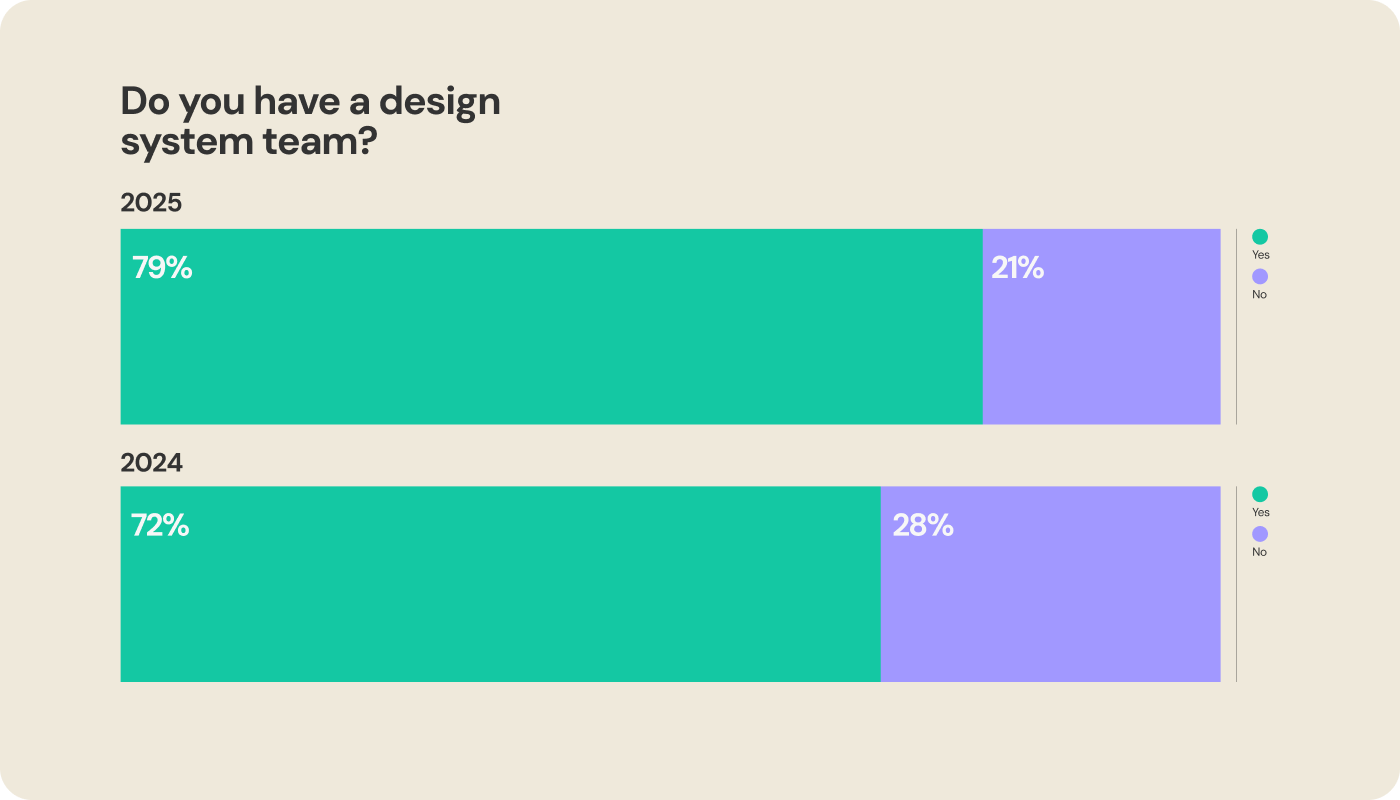
Despite the great contraction of the past few years, more organizations than ever have dedicated design system teams, proving that these systems are no longer just passion projects or experimental tools. In addition to this, it feels like team size is leveling out, with most teams sitting comfortably between 5 and 20 people. Although, it is interesting to note that there are very few teams with over 20 team members. It does give pause as to whether design systems are scaling at the same rate as our product teams. Do we need design systems teams that are proportional to the broader team?
However, with this growth comes new challenges. Many teams are grappling with scaling their systems, managing governance, and ensuring cross-team adoption. As organizations expand their use of design systems, the need for strong leadership and structured processes has never been more critical.
Measuring impact is a priority
As design systems mature, proving their ROI has become essential. Organizations want to ensure that the time and effort spent on maintaining a system translate into tangible benefits.
Teams are focusing on:
- Adoption rates—How many teams are actively using the system?
- Efficiency gains—How much time is being saved in design and development?
- System health metrics—Are components and documentation staying up to date?
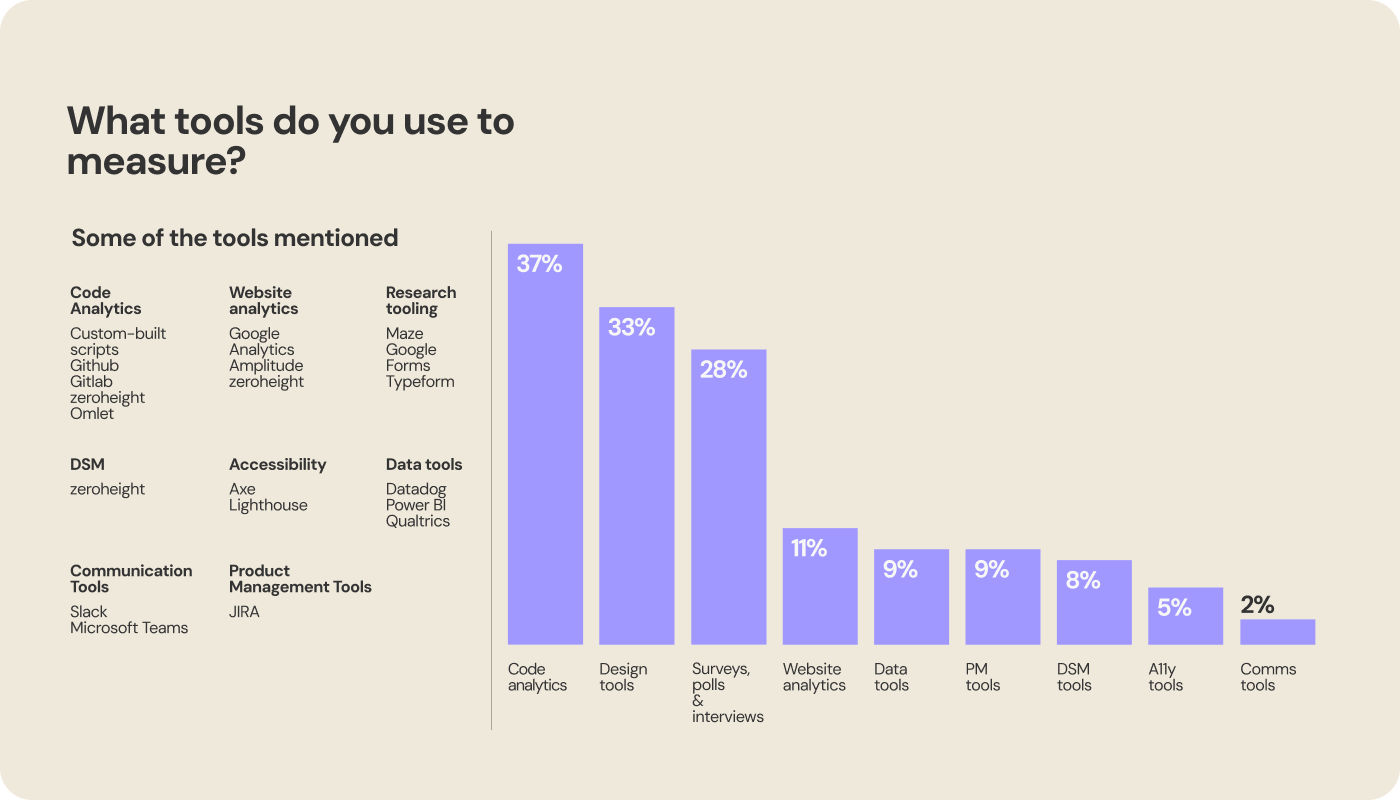
Despite these efforts, measuring success remains a complex challenge. Many teams struggle to define clear KPIs, and there’s still work to demonstrate the full business value of design systems. One area where this is extremely clear is in the tools we use to measure. It seems that there is a fragmented approach to measurement, with a large swathe of tools being used. Is it time for us to consolidate our measurement tooling into a single place?
Bridging the gap between design and code
The disconnect between design and development has always been a major hurdle in scaling design systems. One area where this is clear is with the rise of design tokens. While it’s no surprise that token usage is up, the jump from 56% to 84% coverage is huge and shows that tokens are becoming a key way to bridge that gap.
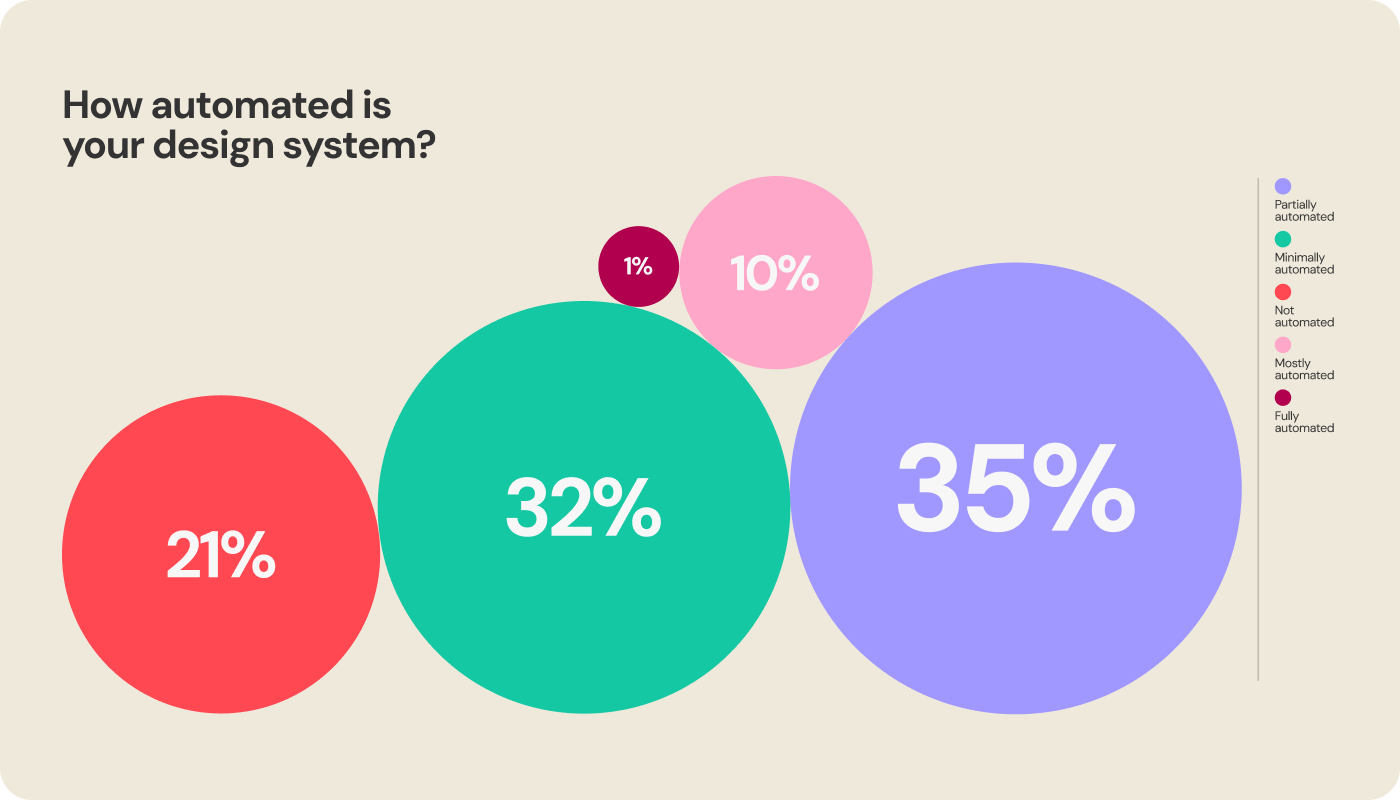
One area that still needs work is automation. Design systems teams are on top of token automation at a base level, but we’re still seeing gaps at a higher level. This was very clear in the chasm between the number of teams that had automation in place and the extremely long wishlist that folks had of things they wanted to automate. Will 2025 be the year we automate everything?
Adoption challenges: Getting folks to use the design system
One of the biggest struggles for design system teams isn’t building the system itself—it’s ensuring widespread adoption across the organization.
Common pain points include:
- Lack of awareness—Many product teams don’t know what’s available.
- Onboarding difficulties—New teams struggle to integrate the system into their workflows.
- Insufficient documentation—If documentation is outdated or unclear, adoption suffers.
However, the biggest area of improvement when it comes to adoption is simply resourcing our teams to be able to achieve something. Limited staff and budget came through as one of the most common challenges. The big question is: How do we convince our stakeholders to give us the cash to set our design system up for success?
What’s next for design systems?
As design systems continue to evolve, a few key trends are shaping the future:
- Better integration—Expect more seamless connections between design tools, development environments, and product management platforms.
- AI-powered design systems—Machine learning and automation could revolutionize how components are built, maintained, and optimized. But do we want it?
- More collaboration—Design, development, and product teams will work even more closely to ensure systems stay relevant and effective. The key to this is likely better communication and community-building
The next frontier for design systems is making them more adaptive, intelligent, and deeply embedded in product teams’ workflows.
Conclusion
The Design Systems Report 2025 makes it clear: design systems are no longer just a nice-to-have—they are essential for scaling modern product teams. But as adoption grows, so do the challenges, from governance to measurement to adoption hurdles.
By staying ahead of these trends, teams can maximize the impact of their design systems and continue driving efficiency, consistency, and innovation.
Want the full deep dive? Download the full report here and get all the insights!
